
India's stock exchanges have decided to jointly introduce the T+1 settlement cycle in phases from February 25, beginning with the bottom 100 stocks by market capitalisation. From March 2022, on the last Friday (or the immediate next trading day) of every month, the next 500 stocks from the bottom will be subject to T+1 settlement. The phase-wise implementation is expected to give all market participants, including foreign portfolio investors (FPIs), ample time to shift to the shorter cycle. The settlement cycle represents the time period within which the stock exchanges have to settle security transactions.
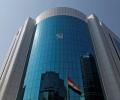
A global association for regulated funds that is leading efforts to shorten the settlement cycle for US equities has reached out to the Securities and Exchange Board of India (Sebi) with a plea to extend the T+1 implementation timeline by 18 months. The short transition period of four months does not provide foreign portfolio investors (FPIs), their services providers, and broker dealers sufficient time to make the necessary operational and compliance changes to accommodate a shorter settlement cycle, ICI Global said in its letter addressed to Sebi chairman Ajay Tyagi written a few days back. ICI Global carries out the international work of the Investment Company Institute (ICI), a global association for regulated funds, whose members manage assets of more than $42 trillion.

IT and ITeS companies accounted for $28.1 billion of the total investment pie during the first nine months of 2021.

The share of public sector undertakings (PSUs) in the total market capitalisation of listed companies--at an all-time low of 10 per cent currently --- may get a leg-up from the government's divestment push. Recently the government announced the successful sale of national carrier Air India to Tata Sons, India's first privatisation of a PSU since 2002-03. The transaction is expected to be completed by December.

Affordable pricing, a variety of themes, and the ease of transacting are among key reasons that have made smallcases a hit among young investors.

Since the beginning of 2020, i-bankers have collected nearly Rs 1,800 crore by way of IPO fees. Interestingly, the India fees this year form just 1 per cent of the global fee pool of $13.7 billion from IPOs.

The real estate sector might have been caught off guard by the second wave of the Covid-19 pandemic, but large listed developers like Godrej Properties and Prestige Estates Projects soldier on undeterred. They aim to have sales bookings of Rs 10,000 crore in the next few years.
The Securities and Exchange Board of India (Sebi) has introduced an optional T+1 settlement cycle for the markets. T+1 means that settlements will have to be cleared within one day of the actual transactions taking place. The regulator has put the onus on the stock exchanges to decide whether they want to opt for the shorter settlement cycle for any of the listed scrips. This can be done after giving a one-month prior notice to all stakeholders.

'We need people who can position a product digitally and craft the journey for customers, by improving user interface and user experience.'

'It is going to be a tough balance for the RBI to manage economic stability and ensure smooth government borrowing.'

Some of the country's largest listed real estate developers - DLF, Prestige Estates, and Puravankara - are foraying into the Rs 50,000-crore residential property market of Mumbai, where home prices are among the highest in the world. All of them are set to launch residential projects in the financial capital of the country, where the market is dominated by players such as Runwal, Lodha, and Oberoi Realty, among others. Leading the race is Prestige, which has lined up 6 million square feet (msf) of new launches in the city across Mulund and Byculla in the third quarter of this financial year (2021-22).

One of Mumbai's biggest real estate redevelopment projects of Bombay Development Directorate's (BDD's) chawls (large buildings divided into many separate tenements, offering cheap, basic accommodation) has taken off in Central Mumbai, opening up a Rs 20,000-crore opportunity for real estate companies. It is expected to drive down real estate prices in Central Mumbai by up to 25 per cent, forecast real estate experts. Spread over 92 acres in Central Mumbai's prime localities of Worli, Lower Parel, and Dadar and consisting 195 four-storey houses, the BDD chawls were constructed in the 1920s.

Radhakishan S Damani, investor and promoter of the D-Mart supermarket chain, has broken into the elite club of the top 100 global billionaires. Damani, who grew up in a single-room apartment in Mumbai, is now ranked 98th on the Bloomberg Billionaires Index with $19.2 billion as his net worth. The index is a daily ranking of the world's richest people. The other Indians on the top 100 rich list ahead of Damani are Mukesh Ambani, Gautam Adani, Azim Premji, Shiv Nadar, and Lakshmi Mittal.

Leading property developers, such as Oberoi Realty, Tata Realty and Infrastructure, and Hiranandani, have turned to redevelopment of existing buildings in the expensive parts of Mumbai as a way of augmenting revenue. Experts estimate that Mumbai's redevelopment projects could be worth Rs 30,000 crore. As such, they are not new. What is new is that the big developers are interested in them. Leading the race is Oberoi Realty, which has set up a separate team for these projects.

'For HNIs, shifting economic activities outside India by creating regional hubs for businesses is a better option.'

Mumbai, India's financial capital, is set for a mega transformation with a massive patch of land opening up for redevelopment; a new metro railway ready to start services by the year-end; and the country's oldest railway station, the Chhatrapati Shivaji Terminus, going for modernisation with private sector participation. Work on Mumbai's second airport will start from next month, while construction of the sea link connecting central Mumbai to Navi Mumbai has already moved into a fast lane despite Covid-induced lockdowns. Also, a coastal road project, connecting Nariman Point to Worli, is under way and will help decongest the city to quite an extent. Of all these mega infrastructure projects, the one that has a huge potential to change the city's skyline is the Eastern Waterfront project - to be built on the Mumbai Port Trust (MbPT) land.

MahaRERA, the authority under Real Estate (Regulation and Development) Act, 2016, in Maharashtra, has blacklisted 644 housing projects in the state for not meeting project deadlines. The authority has prohibited them from being sold, advertised or marketed in the state. These projects were supposed to be completed and handed over to homebuyers in 2017 and 2018. Even though most of the projects are being developed by local developers, one big name on the list is Lavasa Corporation promoted by HCC whose registration expired in 2017.

The deluge of offerings in the primary market, a muted results season and increasing talks of a Fed taper may quicken the pace of overseas investors selling Indian equities in the near term. The next few weeks may see a dozen companies tap the market for initial public offerings and raise about Rs 30,000 crore. These include the likes of Zomato, Glenmark Life Sciences, Utkarsh Small Finance Bank and Seven Islands Shipping.

'Q1 is going to bear the brunt of the second wave, exposing full-year GDP forecasts to downward revisions, unless phase-3 of vaccination is executed quickly.'

 © 2026 Rediff.com - Investor Information - Advertise with us - Disclaimer - Privacy Policy - Sitemap - Feedback - About us - Terms of use - Grievances